Buy etechnic.eu ?
We are moving the project
etechnic.eu .
Are you interested in purchasing the domain
etechnic.eu ?
domain@kv-gmbh.de · 0541-91531010
Buy etechnic.eu ?
What does 'du brunzkache du ogsoachte' mean?
The phrase "du brunzkache du ogsoachte" is in the Bavarian dialect of German and translates to "you're crazy, you're delusional" in English. It is used to express disbelief or to dismiss someone's ideas or actions as irrational or nonsensical. **
Is it said "Du backst" or "Du bäckst"?
The correct form is "Du backst." The verb "backen" means "to bake" in German, and when conjugated for the second person singular (du), it takes the form "backst." The umlaut (ä) in "bäckst" is incorrect in this context. **
Similar search terms for Coteaux-du-Layon-Delicatesse
Top-Angebote
Products related to Coteaux-du-Layon-Delicatesse:
-
"""Pascal Janvier""" """Pascal Janvier Coteaux du Loir Cuvee du Rosier Rouge 2025 Red Wine - France""""""Pineau d’Aunis is one of those grapes that flies under the radar, but in skilled hands it yields carefree reds that the locals enjoy at their own tables and vignerons are loath to sell to importers for fear they will run out of their do-all vin de..."23,97 $*Shipping: 0,00 $Secure redirect to the provider
-
"""Les Vignes Oubliees""" """Les Vignes Oubliees Coteaux du Languedoc Terrasses du Larzac 2019 Red Wine - France""""""The high altitude of the Larzac plateau combines with a schist and sandstone soil to give unusually fresh, delicate wines with silky tannins that also have the garrigue aromas and great generosity that are characteristic of the Languedoc. Though..."36,97 $*Shipping: 0,00 $Secure redirect to the provider
-
Domaine de Bellivière Coteaux du Loir Rouge 'Gorge' Domaine de Belliviere 2022La cantina della Loira Domaine de Bellivière presenta il ‘Rouge-Gorge’ Coteaux du Loir, un vino rosso territoriale di gradevole scorrevolezza. Questa bottiglia è prodotta con il ricercato vitigno autoctono Pineau d’Aunis che, inizialmente per via della crisi viticola dovuta alla fillossera e successivamente a causa del parziale abbandono locale della viticoltura, vide la sua superficie coltivata ridursi drasticamente fino a soli 30 ettari totali, che ne posero a rischio l’esistenza. Negli ultimi anni questa varietà, chiamata anche Chenin Noir, è tornata alla ribalta in virtù della sua importante accessibilità dovuta ai tannini mai invadenti e alla rigenerante freschezza. Domaine de Bellevière Coteaux du Loir ‘Rouge-Gorge’ costituisce un 100% Pineau d’Aunis, allevato secondo i dettami dell’agricoltura biologica e di quella biodinamica su suoli composti da argilla e tufo. Una volta giunti a maturazione, i grappoli vengono raccolti a mano e ammostati in vasche d’acciaio dove ha luogo la fermentazione alcolica spontanea, mentre la conseguente fermentazione malolattica si realizza in barrique. Infine, il vino sosta in botti di legno sulle fecce fini per l’invecchiamento di 15 mesi. Il ‘Rouge-Gorge’ Coteaux du Loir del Domaine de Bellevière possiede un bel colore rosso rubino brillante. Il bouquet aromatico si compone di intensi richiami di ciliegia, prugna, mandorla e pepe, combinati a piacevoli note erbacee che ricordano il finocchio. Morbido, concentrato e ben strutturato l’impatto in bocca, sostenuto da succosa freschezza e delicati tannini. Il ‘Rouge-Gorge’ è un rosso assai versatile negli abbinamenti, ottimo accompagnamento ai tradizionali formaggi di capra della Loira.31,00 £*Shipping: 48,00 £Secure redirect to the provider


-
Do you say "Du backst" or "Du bäckst"?
The correct spelling is "Du backst." The verb "backen" is conjugated as "backst" in the second person singular form. The umlaut on the letter "a" is not used in this conjugation. **
-
Does it say "Du hältst" or "Du hältst"?
It says "Du hältst." **
-
Does it say "Du backst" or "Du bäckst"?
It says "Du backst." The verb "backen" (to bake) is conjugated as "backst" in the second person singular form in the present tense. The form "Du bäckst" would be incorrect in standard German. **
-
Why do we say "du hältst" but not "du setzt" instead "du setzt dich"?
In German, the verb "setzen" typically requires a direct object, so when using it in the second person singular form, it is often accompanied by a reflexive pronoun to indicate that the action is being performed on oneself. This is why we say "du setzt dich" instead of just "du setzt." On the other hand, the verb "halten" does not require a direct object, so it can be used on its own without a reflexive pronoun, resulting in "du hältst." This distinction in usage is a characteristic of the German language and its grammar rules. **


Why is it "du nutzt" and not "du nutzst"?
The verb "nutzen" is an irregular verb in German, and its conjugation in the present tense for the second person singular (du) is "du nutzt" instead of "du nutzst." This irregularity is due to the vowel change in the stem of the verb. In German, some verbs undergo a vowel change in the stem in the present tense conjugation, and "nutzen" is one of those verbs. Therefore, the correct form is "du nutzt" to follow the irregular conjugation pattern of the verb "nutzen." **
What does "Du weißt nicht, was du willst?" mean?
"Du weißt nicht, was du willst?" is a German phrase that translates to "You don't know what you want?" in English. It is often used to express frustration or confusion towards someone who seems indecisive or unsure about their desires or intentions. The phrase can be used in various contexts, such as in relationships, decision-making, or when someone is being wishy-washy about their choices. **
Top-Angebote
Products related to Coteaux-du-Layon-Delicatesse:
-
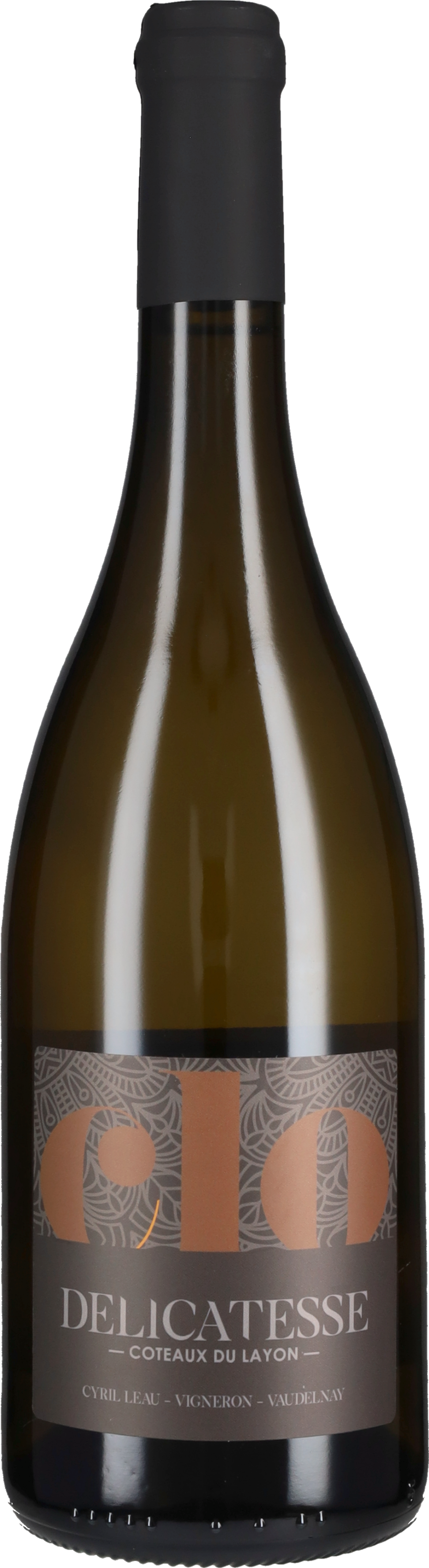
Coteaux du Layon 'Delicatesse' Domaine Clo 2025The Coteaux du Layon “Delicatesse” from Domaine Clo is a version of Chenin Blanc made in the name of sweetness. A soft and seductive wine, it captivates with its gentle and harmonious character and its intense fruity richness. Its charm lies in the perfect balance between the gentle sweetness typical of French moelleux and the characteristic freshness of the grape variety. The aromas of ripe fruit and candied fruit give the sip breadth and softness. It is a sweet wine of great elegance, perfect to enjoy at the table paired with creamy soft cheeses of medium aging. An unmissable bottle to discover the sweet face of Chenin Blanc. “Delicatesse” Coteaux du Layon Domaine Clo is a traditional specialty of the Anjou-Saumur region, made by a winery that has been present in these lands for several generations. The estate is famous for producing wines with a handcrafted character, made with great passion and care. The 25 hectares of the property are managed under organic farming, using only sulfur and copper for treatments. The vineyards are surrounded by wild trees and shrubs, that contribute to increasing the biodiversity of the environmental ecosystem. The Chenin Blanc grapes come from the estate's vineyards cultivated on soils characterized by the presence of silt, clay, and gypsum. At the end of the late harvest, the clusters are gently pressed and the free-run must is spontaneously fermented using only indigenous yeasts in temperature-controlled stainless steel tanks. Before bottling, the wine ages in steel for a few months. The Coteaux du Layon “Delicatesse” from Domaine Clo is an excellent sweet wine, made according to the customs of the Anjou-Saumur area. In appearance, it presents a fascinating golden color with bright amber reflections. The aromatic profile reveals intense aromas of ripe yellow fruit, candied citrus peels, notes of tropical fruit, hints of honey, fruit jam, quince paste, raisins, and delicate oriental spices. The entry on the palate is broad and enveloping, gentle and soft, with rich fruity aromas leading to a velvety and very persistent finish.17,00 £*Shipping: 48,00 £Secure redirect to the provider
-
"""Moulin Touchais""" """Moulin Touchais Coteaux du Layon 1994 White Wine - France""""""The 1994 Coteau du Layon offers an intriguing range of sweet tobacco, dried flowers, candied orange peel and earthy notes. Time in bottle has given the 1994 notable complexity, but it also retains a palpable sense of firmness that differentiates it..."43,99 $*Shipping: 0,00 $Secure redirect to the provider
-
"""Pascal Janvier""" """Pascal Janvier Coteaux du Loir Cuvee du Rosier Rouge 2025 Red Wine - France""""""Pineau d’Aunis is one of those grapes that flies under the radar, but in skilled hands it yields carefree reds that the locals enjoy at their own tables and vignerons are loath to sell to importers for fear they will run out of their do-all vin de..."23,97 $*Shipping: 0,00 $Secure redirect to the provider
-
What does 'du brunzkache du ogsoachte' mean?
The phrase "du brunzkache du ogsoachte" is in the Bavarian dialect of German and translates to "you're crazy, you're delusional" in English. It is used to express disbelief or to dismiss someone's ideas or actions as irrational or nonsensical. **
-
Is it said "Du backst" or "Du bäckst"?
The correct form is "Du backst." The verb "backen" means "to bake" in German, and when conjugated for the second person singular (du), it takes the form "backst." The umlaut (ä) in "bäckst" is incorrect in this context. **
-
Do you say "Du backst" or "Du bäckst"?
The correct spelling is "Du backst." The verb "backen" is conjugated as "backst" in the second person singular form. The umlaut on the letter "a" is not used in this conjugation. **
-
Does it say "Du hältst" or "Du hältst"?
It says "Du hältst." **
Similar search terms for Coteaux-du-Layon-Delicatesse
-
"""Les Vignes Oubliees""" """Les Vignes Oubliees Coteaux du Languedoc Terrasses du Larzac 2019 Red Wine - France""""""The high altitude of the Larzac plateau combines with a schist and sandstone soil to give unusually fresh, delicate wines with silky tannins that also have the garrigue aromas and great generosity that are characteristic of the Languedoc. Though..."36,97 $*Shipping: 0,00 $Secure redirect to the provider
-
Domaine de Bellivière Coteaux du Loir Rouge 'Gorge' Domaine de Belliviere 2022La cantina della Loira Domaine de Bellivière presenta il ‘Rouge-Gorge’ Coteaux du Loir, un vino rosso territoriale di gradevole scorrevolezza. Questa bottiglia è prodotta con il ricercato vitigno autoctono Pineau d’Aunis che, inizialmente per via della crisi viticola dovuta alla fillossera e successivamente a causa del parziale abbandono locale della viticoltura, vide la sua superficie coltivata ridursi drasticamente fino a soli 30 ettari totali, che ne posero a rischio l’esistenza. Negli ultimi anni questa varietà, chiamata anche Chenin Noir, è tornata alla ribalta in virtù della sua importante accessibilità dovuta ai tannini mai invadenti e alla rigenerante freschezza. Domaine de Bellevière Coteaux du Loir ‘Rouge-Gorge’ costituisce un 100% Pineau d’Aunis, allevato secondo i dettami dell’agricoltura biologica e di quella biodinamica su suoli composti da argilla e tufo. Una volta giunti a maturazione, i grappoli vengono raccolti a mano e ammostati in vasche d’acciaio dove ha luogo la fermentazione alcolica spontanea, mentre la conseguente fermentazione malolattica si realizza in barrique. Infine, il vino sosta in botti di legno sulle fecce fini per l’invecchiamento di 15 mesi. Il ‘Rouge-Gorge’ Coteaux du Loir del Domaine de Bellevière possiede un bel colore rosso rubino brillante. Il bouquet aromatico si compone di intensi richiami di ciliegia, prugna, mandorla e pepe, combinati a piacevoli note erbacee che ricordano il finocchio. Morbido, concentrato e ben strutturato l’impatto in bocca, sostenuto da succosa freschezza e delicati tannini. Il ‘Rouge-Gorge’ è un rosso assai versatile negli abbinamenti, ottimo accompagnamento ai tradizionali formaggi di capra della Loira.31,00 £*Shipping: 48,00 £Secure redirect to the provider
-
Domaine de Bellivière Coteaux du Loir Rouge 'Gorge' Domaine de Belliviere 2021malolactic fermentation occurs in barrique. Finally, the wine rests in wooden barrels on the fine lees for 15 months. The ‘Rouge-Gorge’ Coteaux du Loir from Domaine de Bellevière has a beautiful bright ruby red color. The aromatic bouquet consists of intense hints of cherry, plum, almond, and pepper, combined with pleasant herbal notes reminiscent of fennel. Soft, concentrated, and well-structured the mouthfeel, supported by juicy freshness and delicate tannins. The ‘Rouge-Gorge’ is a very versatile red for pairings, excellent with the traditional goat cheeses of the Loire.malolactic fermentation occurs in barrique. Finally, the wine rests in wooden barrels on the fine lees for 15 months. The ‘Rouge-Gorge’ Coteaux du Loir from Domaine de Bellevière has a beautiful bright ruby red color. The aromatic bouquet consists of intense hints of cherry, plum, almond, and pepper, combined with pleasant herbal notes reminiscent of fennel. Soft, concentrated, and well-structured the mouthfeel, supported by juicy freshness and delicate tannins. The ‘Rouge-Gorge’ is a very versatile red for pairings, excellent with the traditional goat cheeses of the Loire.31,00 £*Shipping: 48,00 £Secure redirect to the provider
-
Domaine de Bellivière Coteaux du Loir Blanc 'Effraie' Domaine de Belliviere 2023The Coteaux du Loir Blanc ‘L’Effraie’ is a balanced and mineral expression of Chenin Blanc made by the artisanal winery Domaine de Belliviere. Within the municipality of Lhomme, in the central-northern part of the Loire, this family-run winery, founded in 1995, manages around twenty hectares of certified organic vineyards, also obtaining biodynamic certification in 2011. The French term “effraie”, the name of this label produced from the youngest vines cultivated in the Coteaux-du-Loir denomination, means “barn owl”. ‘L’Effraie’ Blanc Coteaux du Loir from Domaine de Belliviere is made from pure Chenin Blanc, with grapes sourced from plants aged between 10 and 30 years, rooted in clay-limestone soils, with flint and sand present. The vineyards are managed according to organic and biodynamic farming practices. After manual harvesting, the bunches are gently pressed, and the resulting must is left naturally cold decanted. The alcoholic fermentation, carried out exclusively by indigenous yeasts, takes place in barriques, with the subsequent aging phase occurring in wooden barrels for 12 months on the fine lees. Domaine de Belliviere ‘L’Effraie’ Blanc Coteaux du Loir is golden yellow in color. The aromatic profile releases fresh notes of wildflowers and white-fleshed fruit, combined with mineral hints. The very slight perceptible residual sugar on the palate is supported by remarkable freshness, in a harmonious and full-bodied flavor development, with a persistent savory finish. Due to its balanced sensory qualities, ‘L’Effraie’ can accompany a wide variety of dishes, including those from Eastern cuisine.31,00 £*Shipping: 48,00 £Secure redirect to the provider
-
Does it say "Du backst" or "Du bäckst"?
It says "Du backst." The verb "backen" (to bake) is conjugated as "backst" in the second person singular form in the present tense. The form "Du bäckst" would be incorrect in standard German. **
-
Why do we say "du hältst" but not "du setzt" instead "du setzt dich"?
In German, the verb "setzen" typically requires a direct object, so when using it in the second person singular form, it is often accompanied by a reflexive pronoun to indicate that the action is being performed on oneself. This is why we say "du setzt dich" instead of just "du setzt." On the other hand, the verb "halten" does not require a direct object, so it can be used on its own without a reflexive pronoun, resulting in "du hältst." This distinction in usage is a characteristic of the German language and its grammar rules. **
-
Why is it "du nutzt" and not "du nutzst"?
The verb "nutzen" is an irregular verb in German, and its conjugation in the present tense for the second person singular (du) is "du nutzt" instead of "du nutzst." This irregularity is due to the vowel change in the stem of the verb. In German, some verbs undergo a vowel change in the stem in the present tense conjugation, and "nutzen" is one of those verbs. Therefore, the correct form is "du nutzt" to follow the irregular conjugation pattern of the verb "nutzen." **
-
What does "Du weißt nicht, was du willst?" mean?
"Du weißt nicht, was du willst?" is a German phrase that translates to "You don't know what you want?" in English. It is often used to express frustration or confusion towards someone who seems indecisive or unsure about their desires or intentions. The phrase can be used in various contexts, such as in relationships, decision-making, or when someone is being wishy-washy about their choices. **
* All prices are inclusive of VAT and, if applicable, plus shipping costs. The offer information is based on the details provided by the respective shop and is updated through automated processes. Real-time updates do not occur, so deviations can occur in individual cases. ** Note: Parts of this content were created by AI.