Buy etechnic.eu ?
We are moving the project
etechnic.eu .
Are you interested in purchasing the domain
etechnic.eu ?
domain@kv-gmbh.de · 0541-91531010
Buy etechnic.eu ?
How much force is required to turn the micrometer screw?
The force required to turn the micrometer screw depends on the pitch of the screw and the mechanical advantage of the micrometer. The pitch of the screw refers to the distance the spindle advances with one complete turn of the thimble, and the mechanical advantage is the ratio of the distance moved by the spindle to the distance moved by the thimble. Typically, micrometers are designed to provide precise measurements with minimal force, so the force required to turn the micrometer screw is relatively low. However, the exact force required will vary depending on the specific design and construction of the micrometer. **
Should one use an analog or digital micrometer caliper?
The choice between an analog or digital micrometer caliper depends on the specific needs and preferences of the user. Analog micrometer calipers are typically more affordable and do not require batteries, making them a reliable option for simple measurements. On the other hand, digital micrometer calipers provide more precise readings and may be easier to read for those unfamiliar with analog scales. Ultimately, the decision should be based on the level of accuracy required for the measurements and the user's comfort with the different types of calipers. **


Similar search terms for FORCE-5096P9050-Micrometer
Top-Angebote
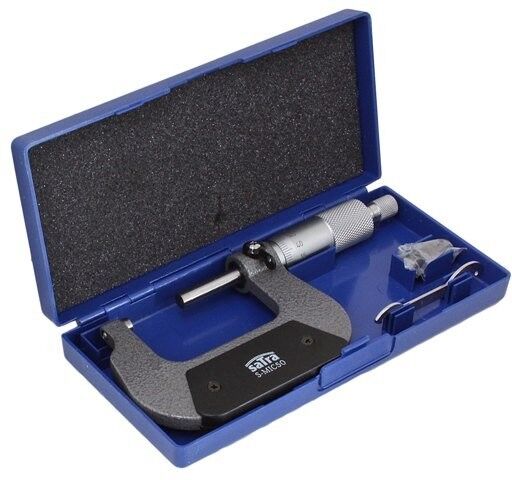
Products related to FORCE-5096P9050-Micrometer:
-
FORCE 20916N ScrewdriverWork side (profile): Slot; Spanner Size: 2.5 mm, 3 mm, 3.5 mm, 4 mm, 5.5 mm, 6.5, PH1, PH2; Total Length [mm]: 160, 185, 185 mm, 205, 240, 265, 100; Shaft Length [mm]: 75, 100, 125, 150, 80; Weight [g]: 32, 38, 66, 87, 122, 71, 102; Screwdriver Blade Profile: Phillips-head (PH); Tool handle type: 2-piece grip26,49 £*Shipping: 8,45 £Secure redirect to the provider


-
Which household item is 0.01 mm (millimeter) or 10 µm (micrometer) thick?
A typical plastic sandwich bag is approximately 0.01 mm or 10 µm thick. These bags are commonly used for storing food and other items in the kitchen. The thinness of the plastic allows for easy storage and preservation of the contents inside. **
-
Why is centrifugal force a fictitious force and centripetal force a real force?
Centrifugal force is considered a fictitious force because it only appears to act on objects in a rotating reference frame, such as a spinning carousel or a turning car. In reality, the object is moving in a straight line, but it appears to be pushed away from the center of rotation due to inertia. On the other hand, centripetal force is a real force that acts towards the center of rotation, keeping an object moving in a circular path. This force is necessary to maintain the object's curved motion and prevent it from moving in a straight line. **
-
What are the physics homework assignments for force-transforming devices?
The physics homework assignments for force-transforming devices may include analyzing the mechanical advantage of simple machines such as levers, pulleys, and inclined planes. Students may also be asked to calculate the work input and output, as well as the efficiency of these devices. Additionally, they may need to understand the concept of torque and how it relates to force-transforming devices. Finally, students may be tasked with solving problems involving the equilibrium of forces in these devices. **
-
Which force?
The force of gravity is the fundamental force that governs the motion of objects in the universe. It is responsible for keeping planets in orbit around the sun, causing objects to fall to the ground, and creating tides on Earth. Gravity is a universal force that acts between all objects with mass, and its strength depends on the mass of the objects and the distance between them. **

Why is centrifugal force a fictitious force and centripetal force a real one?
Centrifugal force is considered a fictitious force because it only appears to act on objects in a rotating reference frame, such as a spinning carousel or a turning car. In reality, the object is moving in a straight line, but it appears to be pushed away from the center due to the rotation. On the other hand, centripetal force is a real force that acts towards the center of rotation, keeping an object moving in a circular path. This force is necessary to maintain the object's curved motion and prevent it from moving in a straight line. **
Which force is responsible for the centripetal force?
The centripetal force is responsible for keeping an object moving in a circular path. This force is provided by another force acting towards the center of the circle, such as tension in a string, gravitational force, or friction. Without this centripetal force, the object would move in a straight line tangent to the circle. **
Top-Angebote
Products related to FORCE-5096P9050-Micrometer:
-
How much force is required to turn the micrometer screw?
The force required to turn the micrometer screw depends on the pitch of the screw and the mechanical advantage of the micrometer. The pitch of the screw refers to the distance the spindle advances with one complete turn of the thimble, and the mechanical advantage is the ratio of the distance moved by the spindle to the distance moved by the thimble. Typically, micrometers are designed to provide precise measurements with minimal force, so the force required to turn the micrometer screw is relatively low. However, the exact force required will vary depending on the specific design and construction of the micrometer. **
-
Should one use an analog or digital micrometer caliper?
The choice between an analog or digital micrometer caliper depends on the specific needs and preferences of the user. Analog micrometer calipers are typically more affordable and do not require batteries, making them a reliable option for simple measurements. On the other hand, digital micrometer calipers provide more precise readings and may be easier to read for those unfamiliar with analog scales. Ultimately, the decision should be based on the level of accuracy required for the measurements and the user's comfort with the different types of calipers. **
-
Which household item is 0.01 mm (millimeter) or 10 µm (micrometer) thick?
A typical plastic sandwich bag is approximately 0.01 mm or 10 µm thick. These bags are commonly used for storing food and other items in the kitchen. The thinness of the plastic allows for easy storage and preservation of the contents inside. **
-
Why is centrifugal force a fictitious force and centripetal force a real force?
Centrifugal force is considered a fictitious force because it only appears to act on objects in a rotating reference frame, such as a spinning carousel or a turning car. In reality, the object is moving in a straight line, but it appears to be pushed away from the center of rotation due to inertia. On the other hand, centripetal force is a real force that acts towards the center of rotation, keeping an object moving in a circular path. This force is necessary to maintain the object's curved motion and prevent it from moving in a straight line. **
Similar search terms for FORCE-5096P9050-Micrometer
-
FORCE 20916N ScrewdriverWork side (profile): Slot; Spanner Size: 2.5 mm, 3 mm, 3.5 mm, 4 mm, 5.5 mm, 6.5, PH1, PH2; Total Length [mm]: 160, 185, 185 mm, 205, 240, 265, 100; Shaft Length [mm]: 75, 100, 125, 150, 80; Weight [g]: 32, 38, 66, 87, 122, 71, 102; Screwdriver Blade Profile: Phillips-head (PH); Tool handle type: 2-piece grip26,49 £*Shipping: 8,45 £Secure redirect to the provider
-
What are the physics homework assignments for force-transforming devices?
The physics homework assignments for force-transforming devices may include analyzing the mechanical advantage of simple machines such as levers, pulleys, and inclined planes. Students may also be asked to calculate the work input and output, as well as the efficiency of these devices. Additionally, they may need to understand the concept of torque and how it relates to force-transforming devices. Finally, students may be tasked with solving problems involving the equilibrium of forces in these devices. **
-
Which force?
The force of gravity is the fundamental force that governs the motion of objects in the universe. It is responsible for keeping planets in orbit around the sun, causing objects to fall to the ground, and creating tides on Earth. Gravity is a universal force that acts between all objects with mass, and its strength depends on the mass of the objects and the distance between them. **
-
Why is centrifugal force a fictitious force and centripetal force a real one?
Centrifugal force is considered a fictitious force because it only appears to act on objects in a rotating reference frame, such as a spinning carousel or a turning car. In reality, the object is moving in a straight line, but it appears to be pushed away from the center due to the rotation. On the other hand, centripetal force is a real force that acts towards the center of rotation, keeping an object moving in a circular path. This force is necessary to maintain the object's curved motion and prevent it from moving in a straight line. **
-
Which force is responsible for the centripetal force?
The centripetal force is responsible for keeping an object moving in a circular path. This force is provided by another force acting towards the center of the circle, such as tension in a string, gravitational force, or friction. Without this centripetal force, the object would move in a straight line tangent to the circle. **
* All prices are inclusive of VAT and, if applicable, plus shipping costs. The offer information is based on the details provided by the respective shop and is updated through automated processes. Real-time updates do not occur, so deviations can occur in individual cases. ** Note: Parts of this content were created by AI.