Buy etechnic.eu ?
We are moving the project
etechnic.eu .
Are you interested in purchasing the domain
etechnic.eu ?
domain@kv-gmbh.de · 0541-91531010
Buy etechnic.eu ?
What is a pendulum clock spring?
A pendulum clock spring is a coiled metal spring that powers the movement of a pendulum clock. It is wound up manually or automatically, storing potential energy that is gradually released to regulate the movement of the clock's gears and hands. The spring's tension controls the speed at which the gears turn, ensuring accurate timekeeping. When the spring unwinds, it releases energy that drives the clock's mechanism until it needs to be wound up again. **
How can you replace the spring of an old pendulum clock?
To replace the spring of an old pendulum clock, you will need to first open the clock case and locate the spring barrel. Next, carefully release the tension on the old spring by turning the arbor in the direction opposite to the winding direction. Once the tension is released, remove the old spring and replace it with a new one of the same size and type. Finally, wind the new spring back into the spring barrel in the correct direction and test the clock to ensure it is functioning properly. **

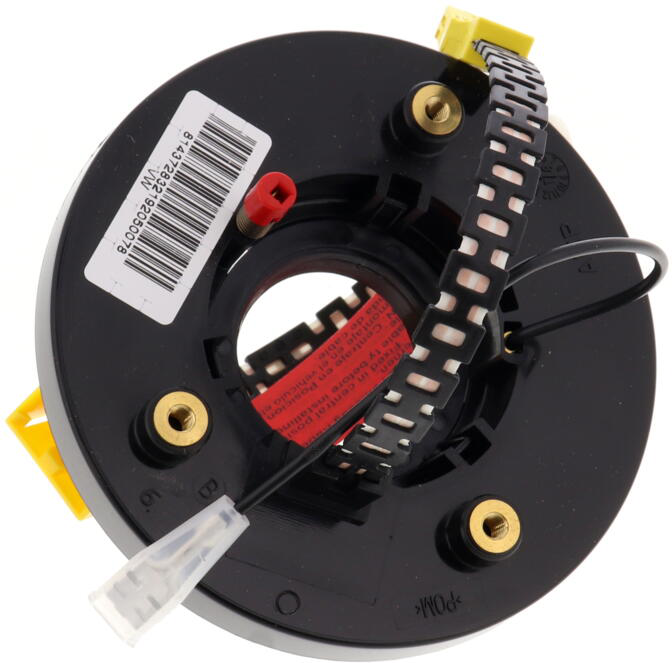
Similar search terms for NTY-EAS-RE-021-Clock-spring
Top-Angebote
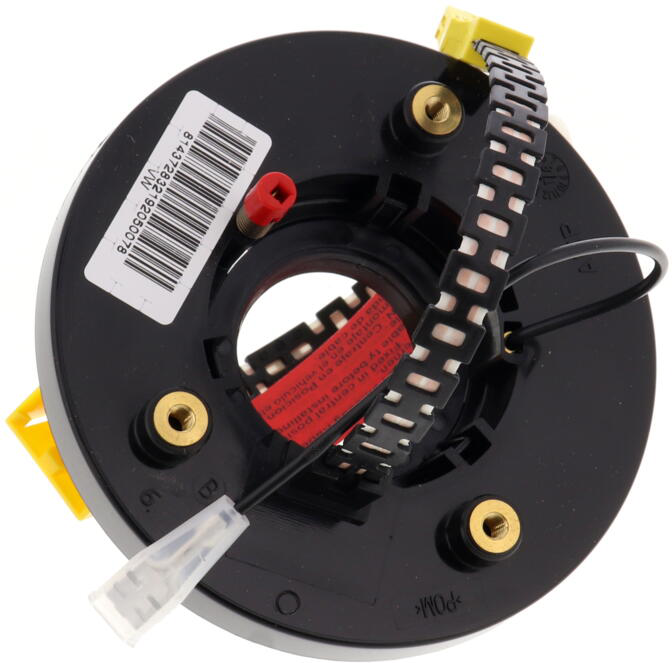
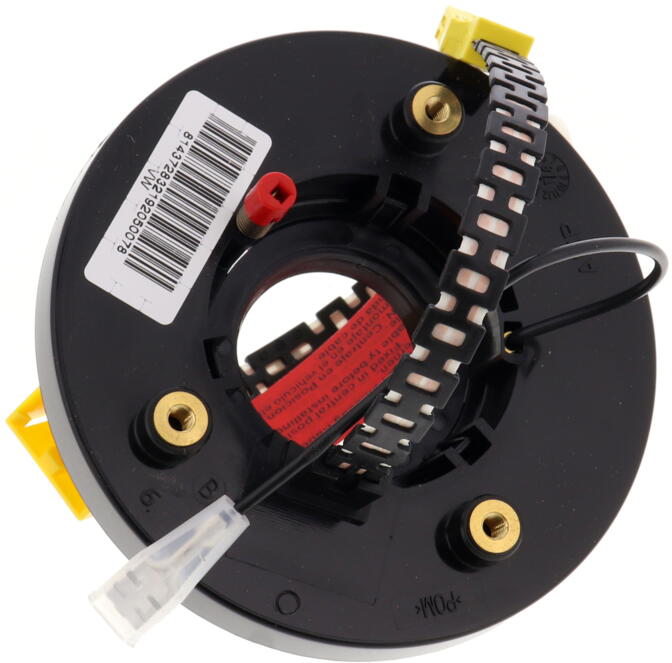
Products related to NTY-EAS-RE-021-Clock-spring:


-
How can one replace the spring of an old pendulum clock?
To replace the spring of an old pendulum clock, you will first need to open the clock case and locate the spring barrel. Next, carefully release the tension on the old spring by turning the arbor in the direction opposite to winding. Once the old spring is removed, insert the new spring into the barrel, making sure it is properly seated. Finally, wind the new spring in the correct direction and test the clock to ensure it is functioning properly. **
-
How do you calculate the oscillation time of a pendulum clock and a spring clock in physics?
To calculate the oscillation time of a pendulum clock, you can use the formula T = 2π√(L/g), where T is the oscillation time, L is the length of the pendulum, and g is the acceleration due to gravity. For a spring clock, you can calculate the oscillation time using the formula T = 2π√(m/k), where T is the oscillation time, m is the mass attached to the spring, and k is the spring constant. By plugging in the respective values for length and gravity for the pendulum clock, or mass and spring constant for the spring clock, you can determine the oscillation time for each type of clock. **
-
How do you calculate the oscillation period of a pendulum clock and a spring clock in physics?
To calculate the oscillation period of a pendulum clock, you can use the formula T = 2π√(L/g), where T is the period, L is the length of the pendulum, and g is the acceleration due to gravity. For a spring clock, you can use the formula T = 2π√(m/k), where T is the period, m is the mass attached to the spring, and k is the spring constant. By plugging in the values for length and gravity for the pendulum clock, or mass and spring constant for the spring clock, you can calculate the oscillation period for each type of clock. **
-
What are five rational numbers between 021 and 024?
Five rational numbers between 021 and 024 are 21.1, 21.5, 22, 22.5, and 23. Rational numbers are those that can be expressed as a fraction of two integers, and all of these numbers fit that criteria. **

How can I calculate the tangent of 021, for example on a calculator?
To calculate the tangent of 021 on a calculator, you would first need to ensure that your calculator is set to the correct angle mode (either degrees or radians). Then, simply input "tan(21)" or "tan(21°)" into the calculator and press the "equals" button. The calculator will then display the tangent of 21 degrees, which is approximately 0.3894. **
How does a PTC re-settable fuse work in electronics?
A PTC (positive temperature coefficient) re-settable fuse works by using a polymer material that has a high resistance at normal operating temperatures. When a high current or overcurrent condition occurs, the PTC fuse heats up and its resistance increases dramatically, effectively limiting the current flow and protecting the circuit. Once the overcurrent condition is removed, the PTC fuse cools down and its resistance decreases, allowing the circuit to function normally again. This self-resetting feature makes PTC fuses ideal for protecting electronic circuits from overcurrent events. **
Top-Angebote
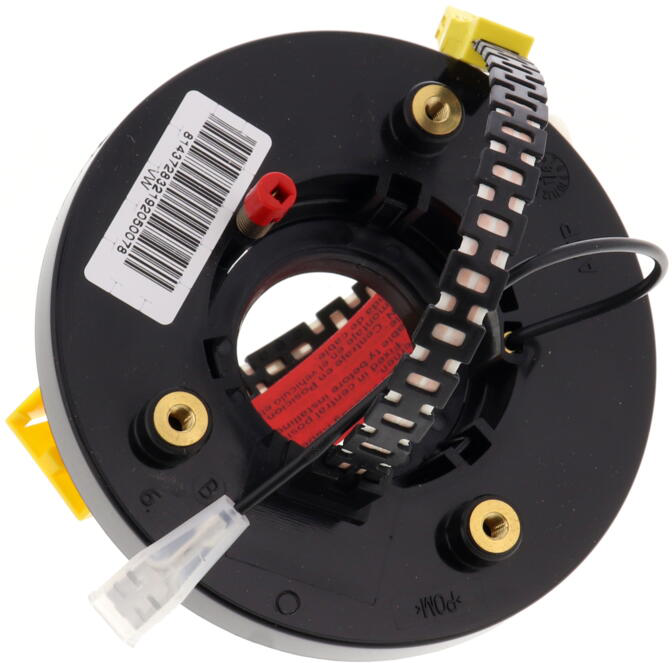
Products related to NTY-EAS-RE-021-Clock-spring:
-
What is a pendulum clock spring?
A pendulum clock spring is a coiled metal spring that powers the movement of a pendulum clock. It is wound up manually or automatically, storing potential energy that is gradually released to regulate the movement of the clock's gears and hands. The spring's tension controls the speed at which the gears turn, ensuring accurate timekeeping. When the spring unwinds, it releases energy that drives the clock's mechanism until it needs to be wound up again. **
-
How can you replace the spring of an old pendulum clock?
To replace the spring of an old pendulum clock, you will need to first open the clock case and locate the spring barrel. Next, carefully release the tension on the old spring by turning the arbor in the direction opposite to the winding direction. Once the tension is released, remove the old spring and replace it with a new one of the same size and type. Finally, wind the new spring back into the spring barrel in the correct direction and test the clock to ensure it is functioning properly. **
-
How can one replace the spring of an old pendulum clock?
To replace the spring of an old pendulum clock, you will first need to open the clock case and locate the spring barrel. Next, carefully release the tension on the old spring by turning the arbor in the direction opposite to winding. Once the old spring is removed, insert the new spring into the barrel, making sure it is properly seated. Finally, wind the new spring in the correct direction and test the clock to ensure it is functioning properly. **
-
How do you calculate the oscillation time of a pendulum clock and a spring clock in physics?
To calculate the oscillation time of a pendulum clock, you can use the formula T = 2π√(L/g), where T is the oscillation time, L is the length of the pendulum, and g is the acceleration due to gravity. For a spring clock, you can calculate the oscillation time using the formula T = 2π√(m/k), where T is the oscillation time, m is the mass attached to the spring, and k is the spring constant. By plugging in the respective values for length and gravity for the pendulum clock, or mass and spring constant for the spring clock, you can determine the oscillation time for each type of clock. **
Similar search terms for NTY-EAS-RE-021-Clock-spring
-
How do you calculate the oscillation period of a pendulum clock and a spring clock in physics?
To calculate the oscillation period of a pendulum clock, you can use the formula T = 2π√(L/g), where T is the period, L is the length of the pendulum, and g is the acceleration due to gravity. For a spring clock, you can use the formula T = 2π√(m/k), where T is the period, m is the mass attached to the spring, and k is the spring constant. By plugging in the values for length and gravity for the pendulum clock, or mass and spring constant for the spring clock, you can calculate the oscillation period for each type of clock. **
-
What are five rational numbers between 021 and 024?
Five rational numbers between 021 and 024 are 21.1, 21.5, 22, 22.5, and 23. Rational numbers are those that can be expressed as a fraction of two integers, and all of these numbers fit that criteria. **
-
How can I calculate the tangent of 021, for example on a calculator?
To calculate the tangent of 021 on a calculator, you would first need to ensure that your calculator is set to the correct angle mode (either degrees or radians). Then, simply input "tan(21)" or "tan(21°)" into the calculator and press the "equals" button. The calculator will then display the tangent of 21 degrees, which is approximately 0.3894. **
-
How does a PTC re-settable fuse work in electronics?
A PTC (positive temperature coefficient) re-settable fuse works by using a polymer material that has a high resistance at normal operating temperatures. When a high current or overcurrent condition occurs, the PTC fuse heats up and its resistance increases dramatically, effectively limiting the current flow and protecting the circuit. Once the overcurrent condition is removed, the PTC fuse cools down and its resistance decreases, allowing the circuit to function normally again. This self-resetting feature makes PTC fuses ideal for protecting electronic circuits from overcurrent events. **
* All prices are inclusive of VAT and, if applicable, plus shipping costs. The offer information is based on the details provided by the respective shop and is updated through automated processes. Real-time updates do not occur, so deviations can occur in individual cases. ** Note: Parts of this content were created by AI.